Everyone photographs the mountains. Almost nobody tells you that the same range that makes you want to stand still is also the best playground on Earth — and the two feelings are not opposites. The Himalaya is big enough for both. In a single week you can fall out of the sky over Bir, fight the Beas river through twenty rapids, hang from a cable above a waterfall, ride a ridgeline on two wheels, and then walk quietly through it all, the way humans have for thousands of years.
We did all five in August, and this is the field guide we wish we'd had.
1. Paragliding — Bir Billing, 2,400 m
Bir Billing is one of the highest paragliding takeoffs on Earth, and the flight is the quietest thing you will ever do at speed. The takeoff is the only hard part — your feet leave the ground, the wing snaps open above you, and then the wind does the work. For thirty minutes you are not falling; you are being held. The valley floor comes up slowly, the Himalayan foothills slide past, and the landing is a soft run onto grass.
- Season: October to June is best; August is doable but thermic
- Takeoff: 2,400 m, 30-minute flights
- What you need: nothing — the school provides the wing, harness and pilot
- The feeling: the closest thing to flying that does not involve an aircraft
2. White-water rafting — the Beas, grade III-IV
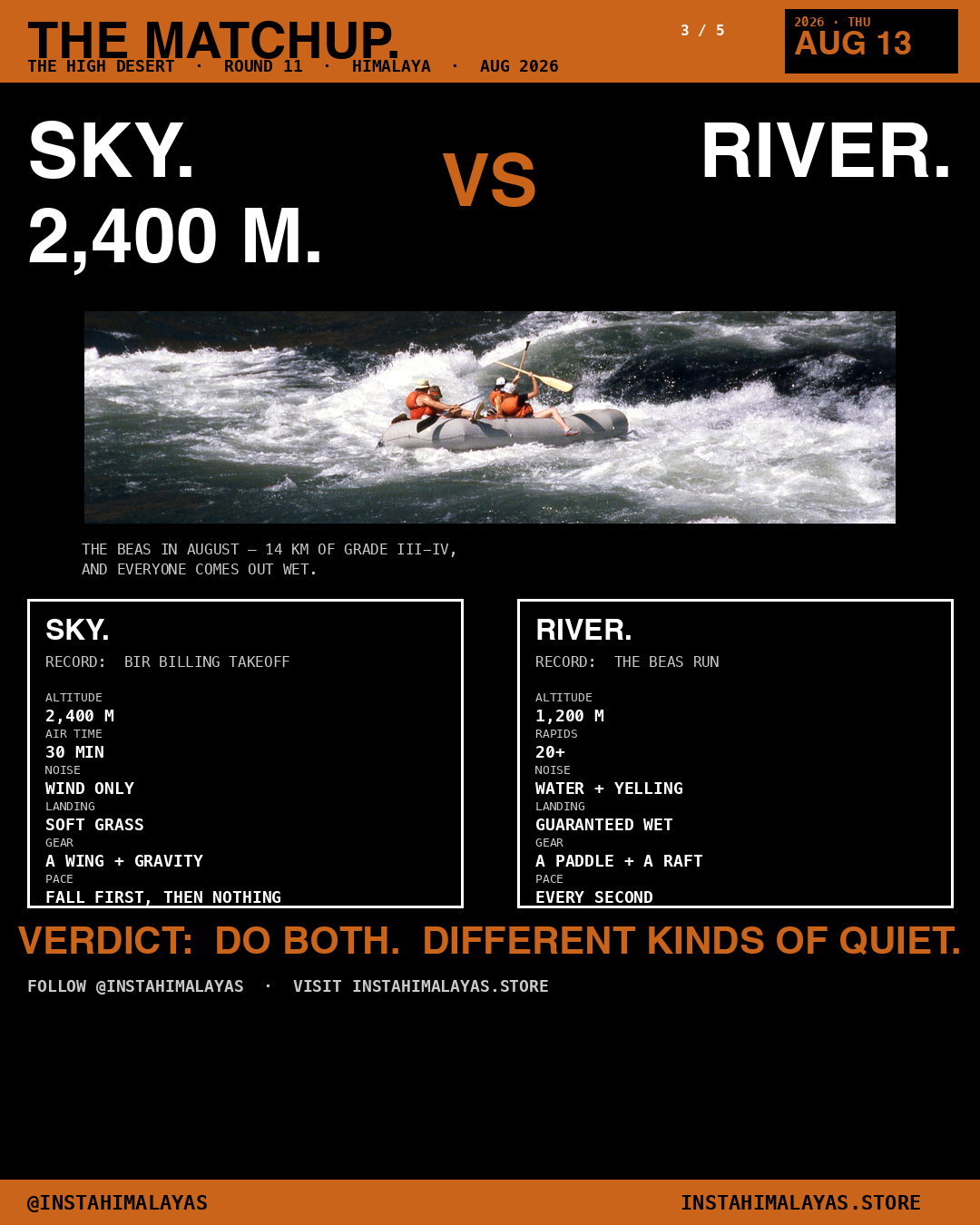
The Beas in August is not the Beas of April. The monsoon has fed it, and it is loud, brown and completely serious. Fourteen kilometres of white water, twenty-plus rapids, and a guide who knows every one of them by name. You will be wet before the first rapid and laughing by the fifth. It is the loudest adventure sport on this list, and it ends in the quietest silence — floating, drifting, the paddles resting, the valley doing the talking.
- Season: late May to mid-September (August = full volume)
- Stretch: Kullu to Bajaura, 14 km, grade III-IV
- What you need: a life jacket, a paddle, and the ability to follow one instruction — "paddle!"
- The verdict: everyone comes out wet. Nobody comes out unchanged.
3. Ziplining — across the gorge
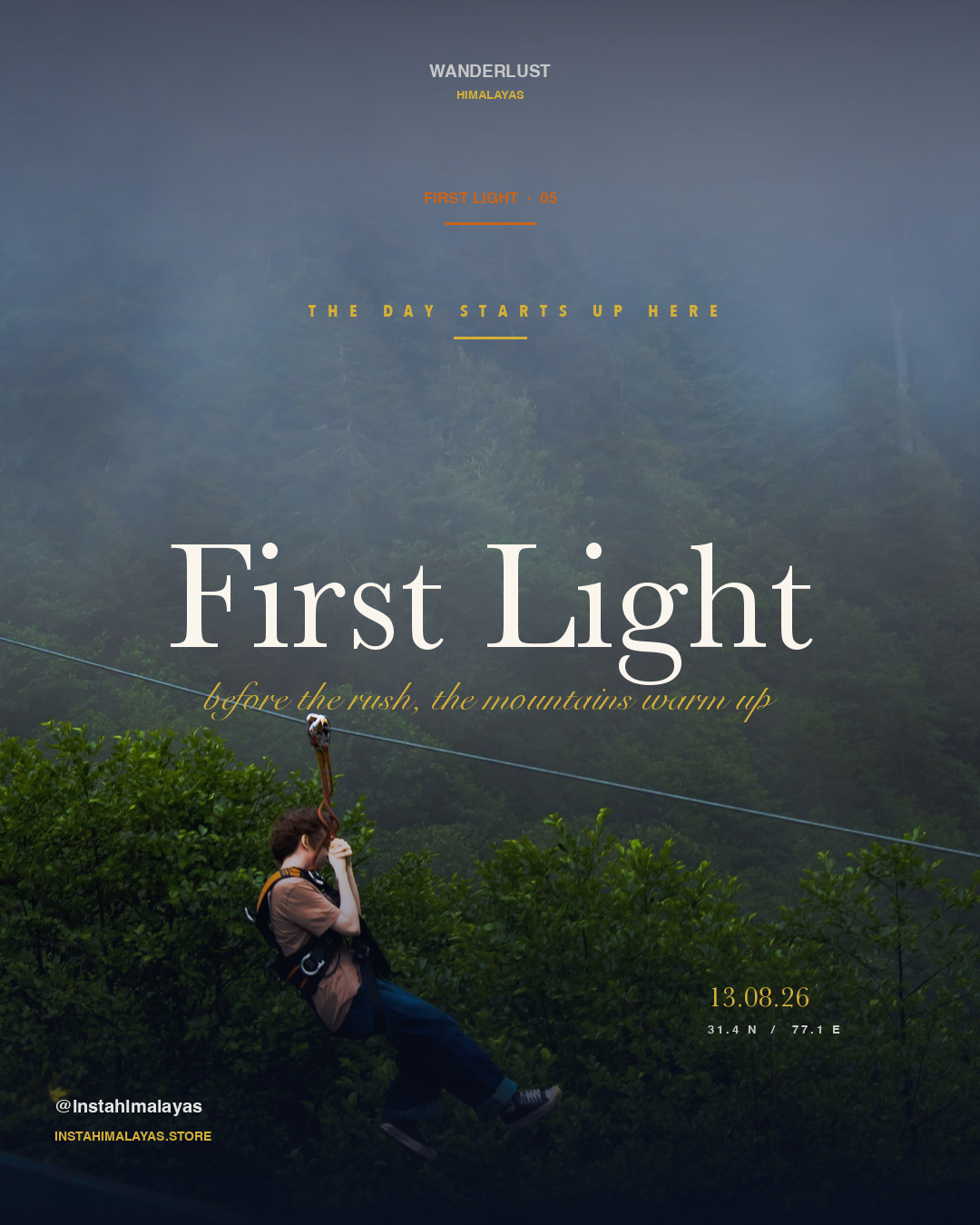
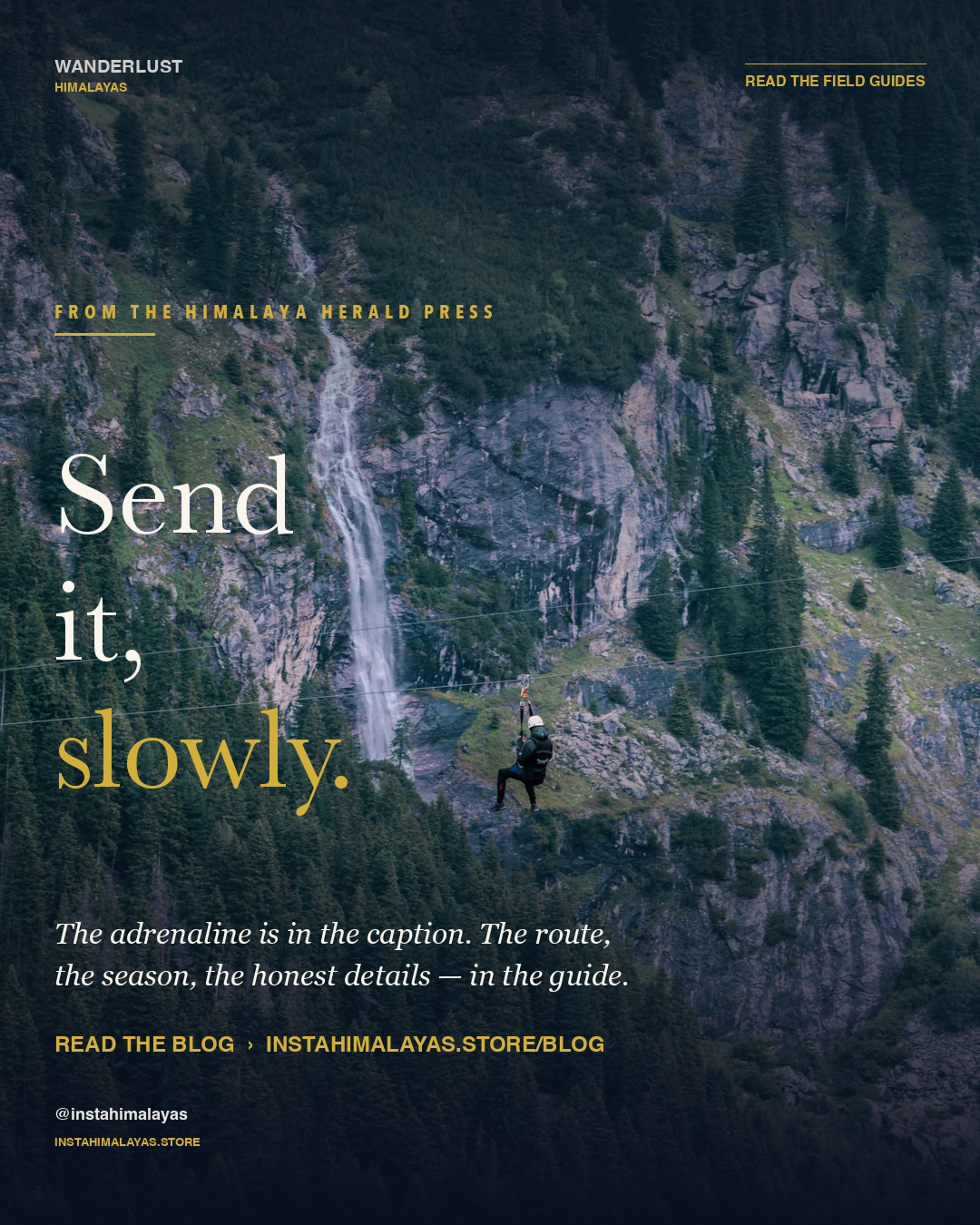
The zipline is the shortest adventure on this list and the one that looks the most impossible. A single cable stretched across a waterfall gorge, a harness, and four hundred metres of nothing but air. The first second is terror; the next forty are the most focused you have ever been; the last ten, as you slow over the landing platform, are pure grin. It is the entry-level adrenaline — the one you can talk a nervous friend into.
4. Mountain biking — the ridge trail
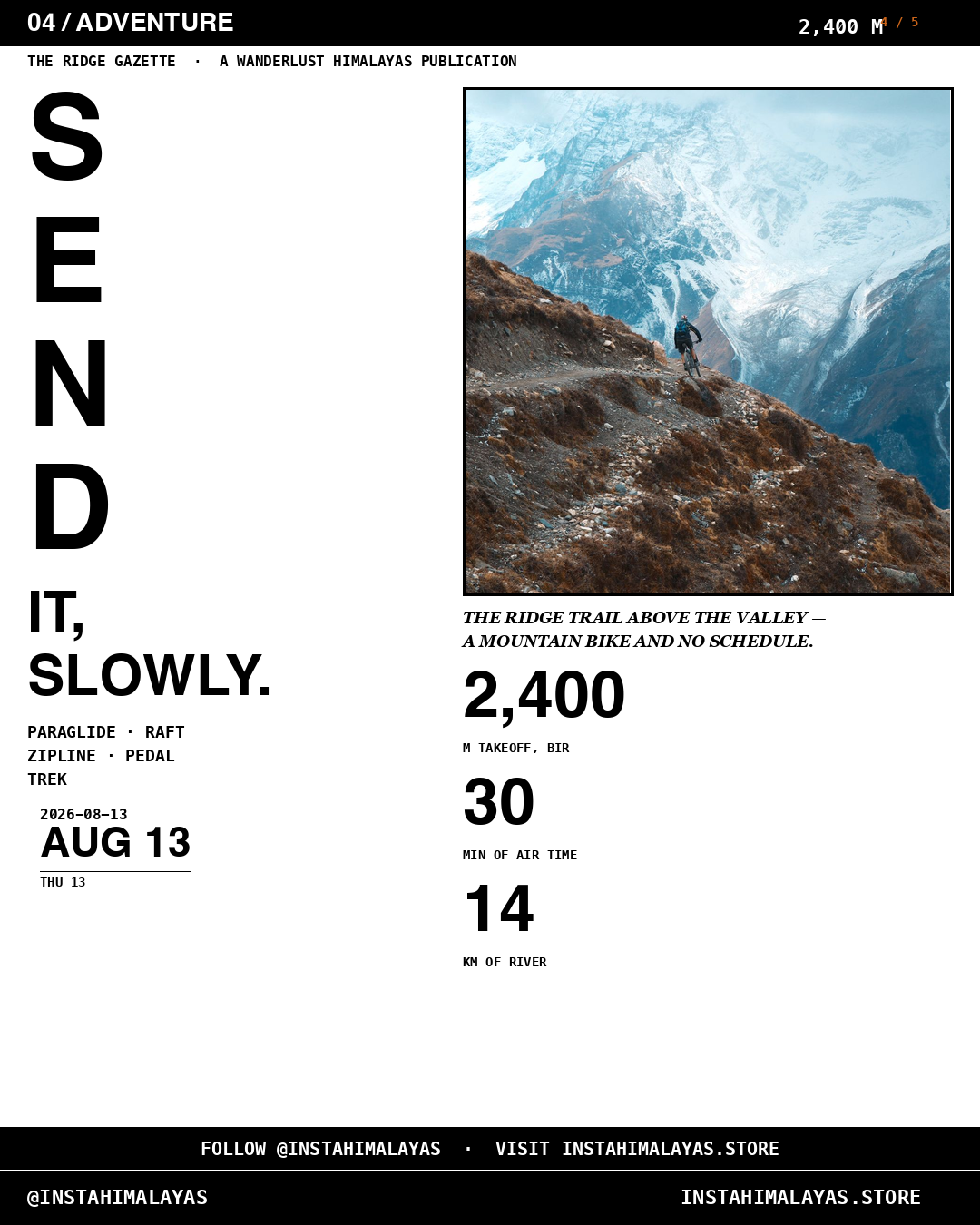
Above the tree line, the roads end and the trails begin. The ridge trail we rode is a single narrow line of dirt along the edge of a valley, with the whole range on one side and a very long drop on the other. The bike does the climbing if you let it; the descent is the reward. No engine, no schedule, just you, the altitude, and the sound of tyres on gravel.
5. Trekking — the oldest adventure sport
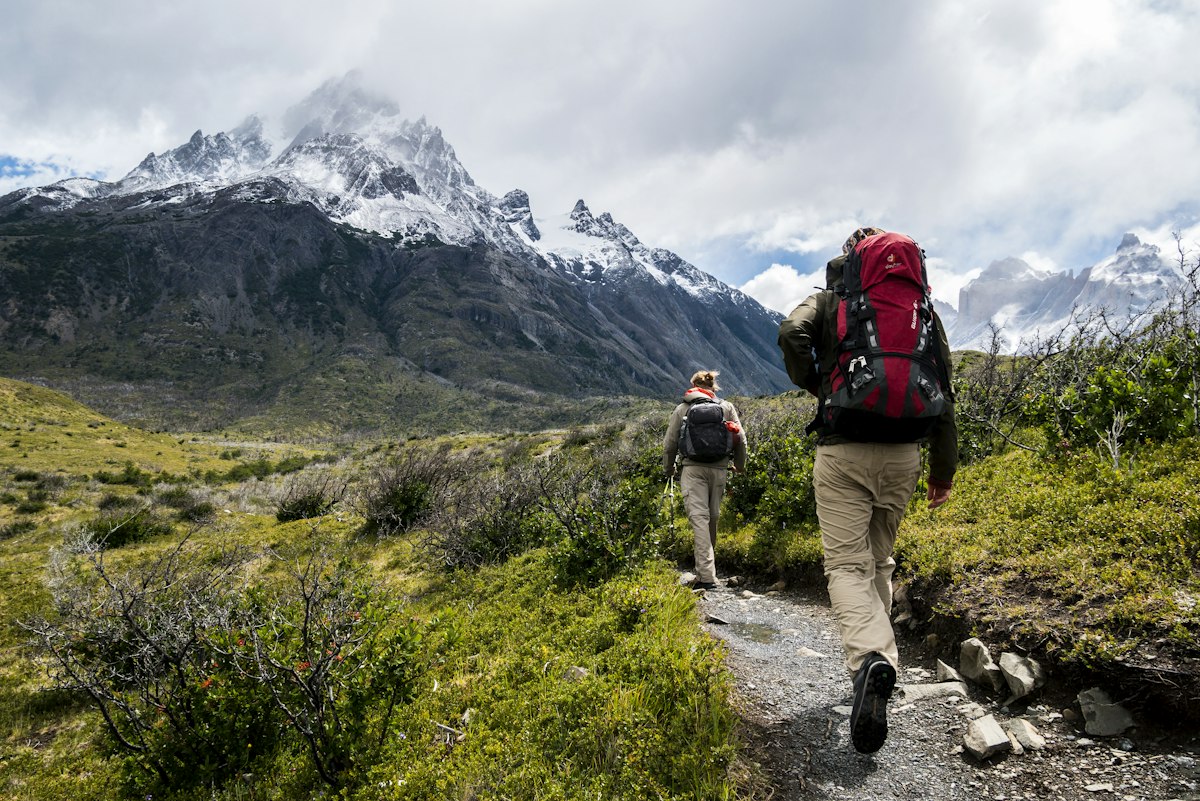
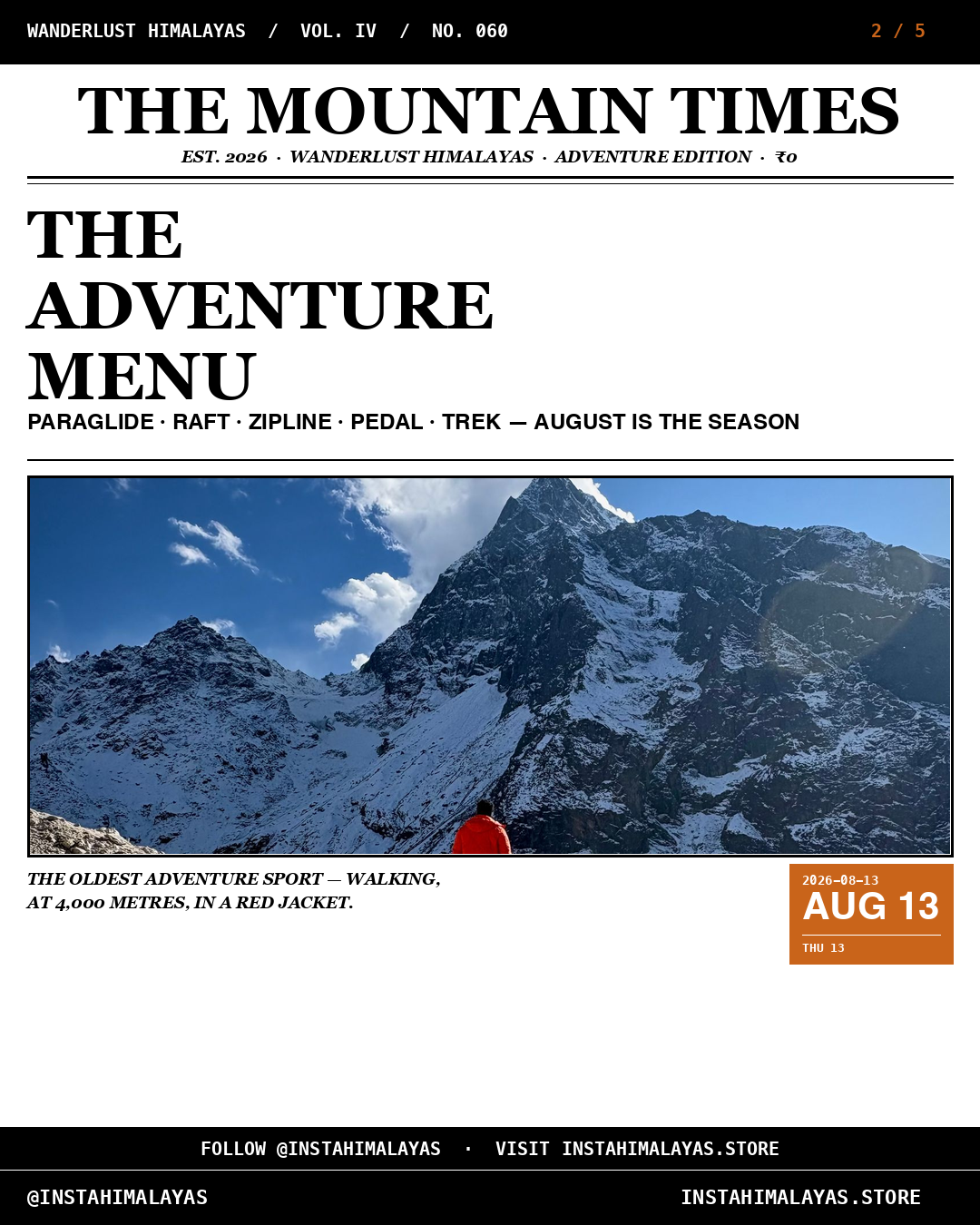
Before any of this existed, people walked. Trekking is the original adventure sport and it is still the best one: no gear beyond good boots, no takeoff, no rapids — just the slow, honest work of moving through the mountains at human speed. At 4,000 metres, in a red jacket, looking up at the peaks, you understand why the Himalaya has been drawing walkers for a thousand years.
The practical rules
- Acclimatise first. Do the quiet things on day one (walk, raft lower sections) and the altitude things (paragliding, high trails) after you've slept above 2,000 m.
- Book the paragliding for morning. The thermals build through the day; the calmest flights are before 10 AM.
- The rafting is wet, not dangerous. Listen to the guide, hold the T-grip properly, and the worst case is falling in — which, in August, is basically the point.
- One activity per day. These are not day-fillers; each one deserves the whole afternoon around it.
- Carry the honest numbers. Season, grade, altitude — they are not decoration. They are how you stay safe while the mountains do their part.
The verdict
The loudest sport ends in the quietest silence. The scariest one is the most peaceful. The Himalayas do not ask you to be brave — they ask you to show up, and then they handle the rest.
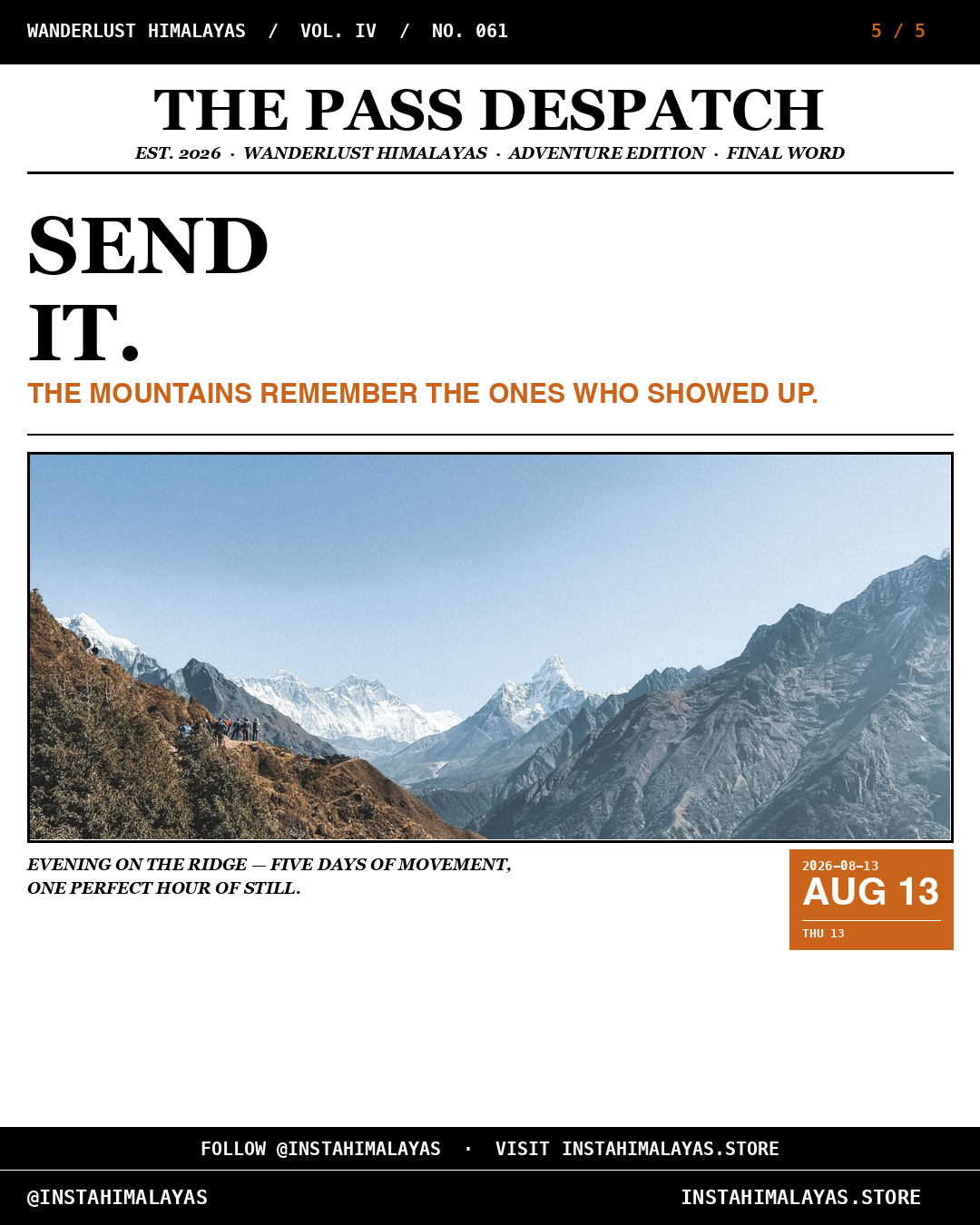
Send it. Slowly.