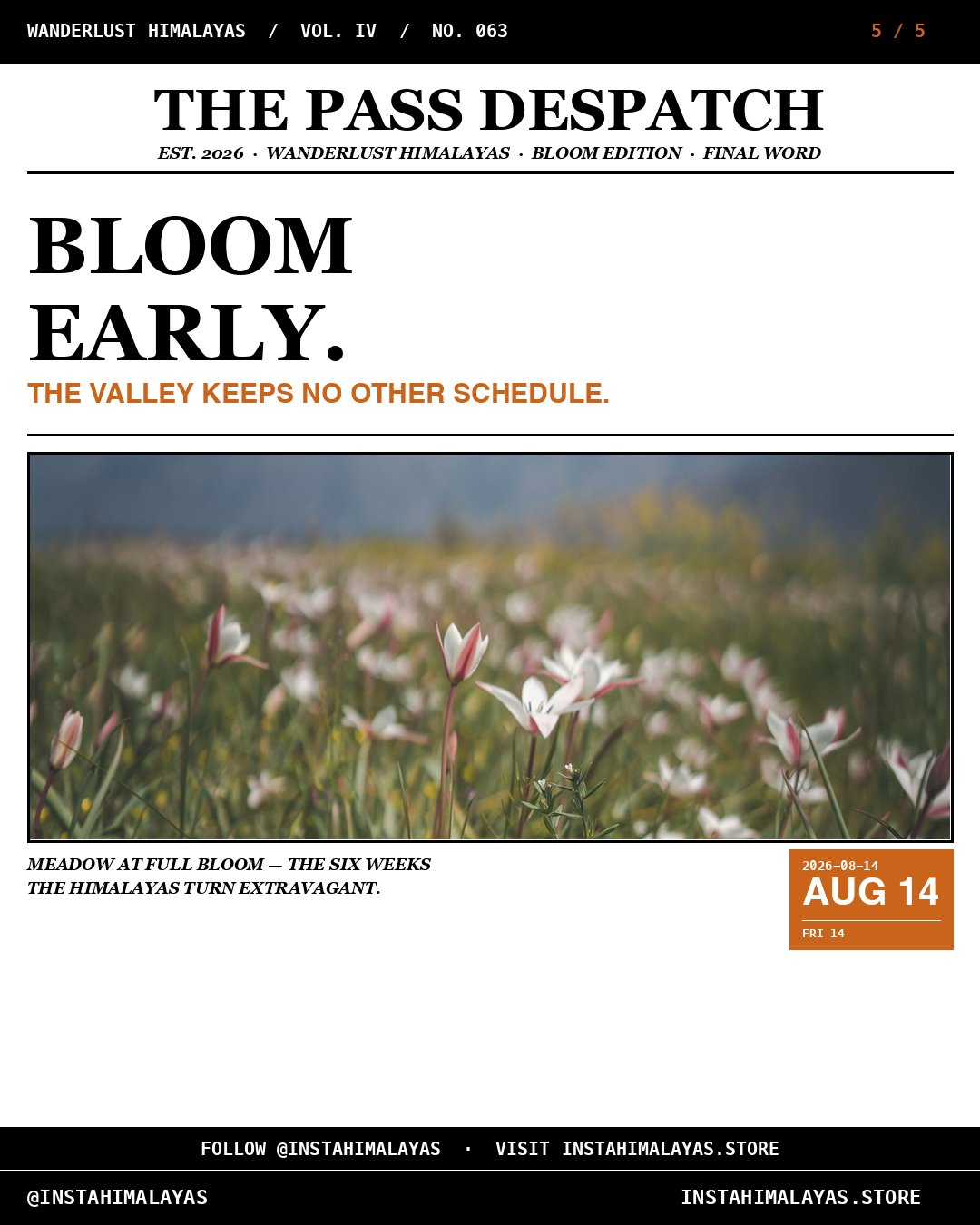
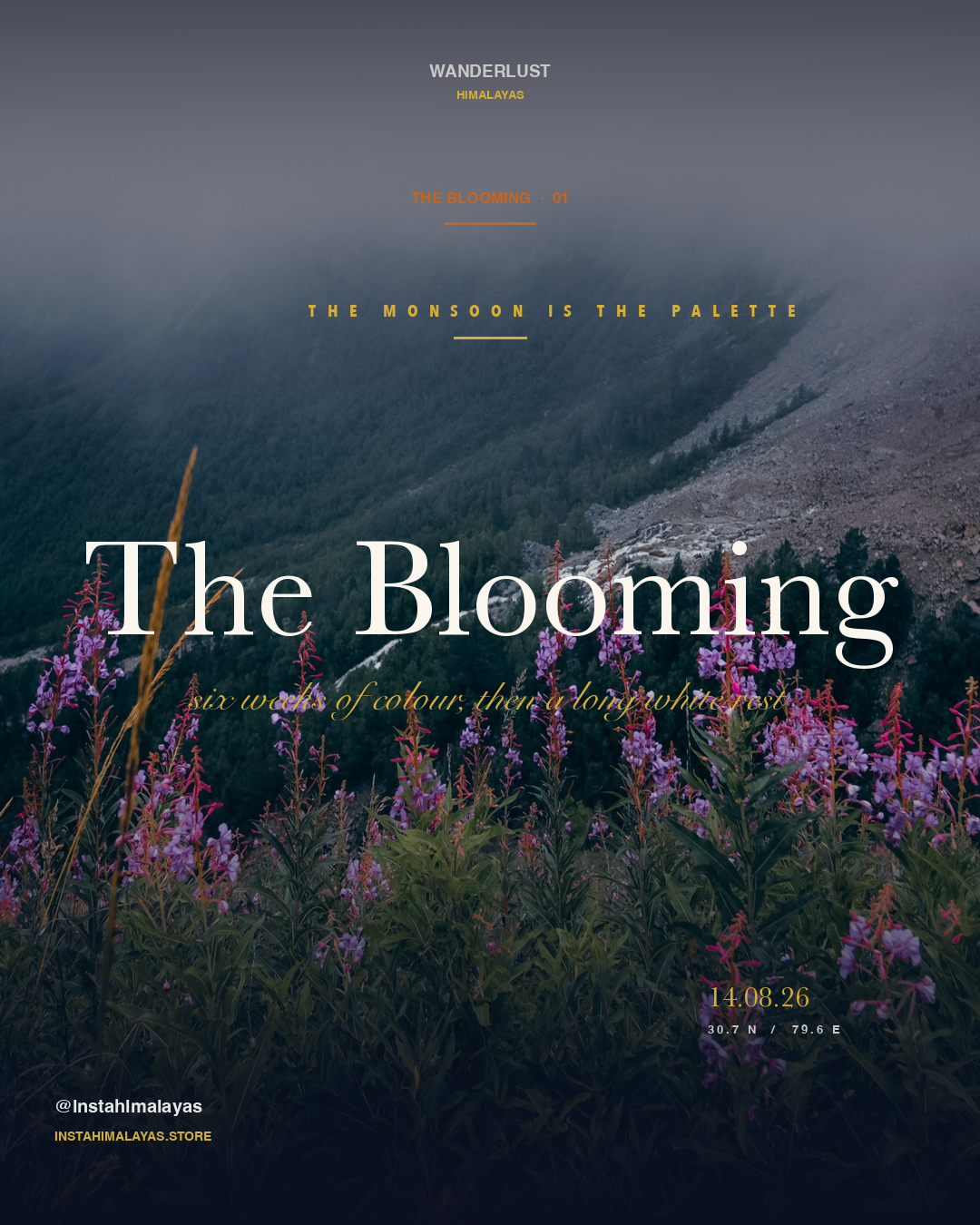
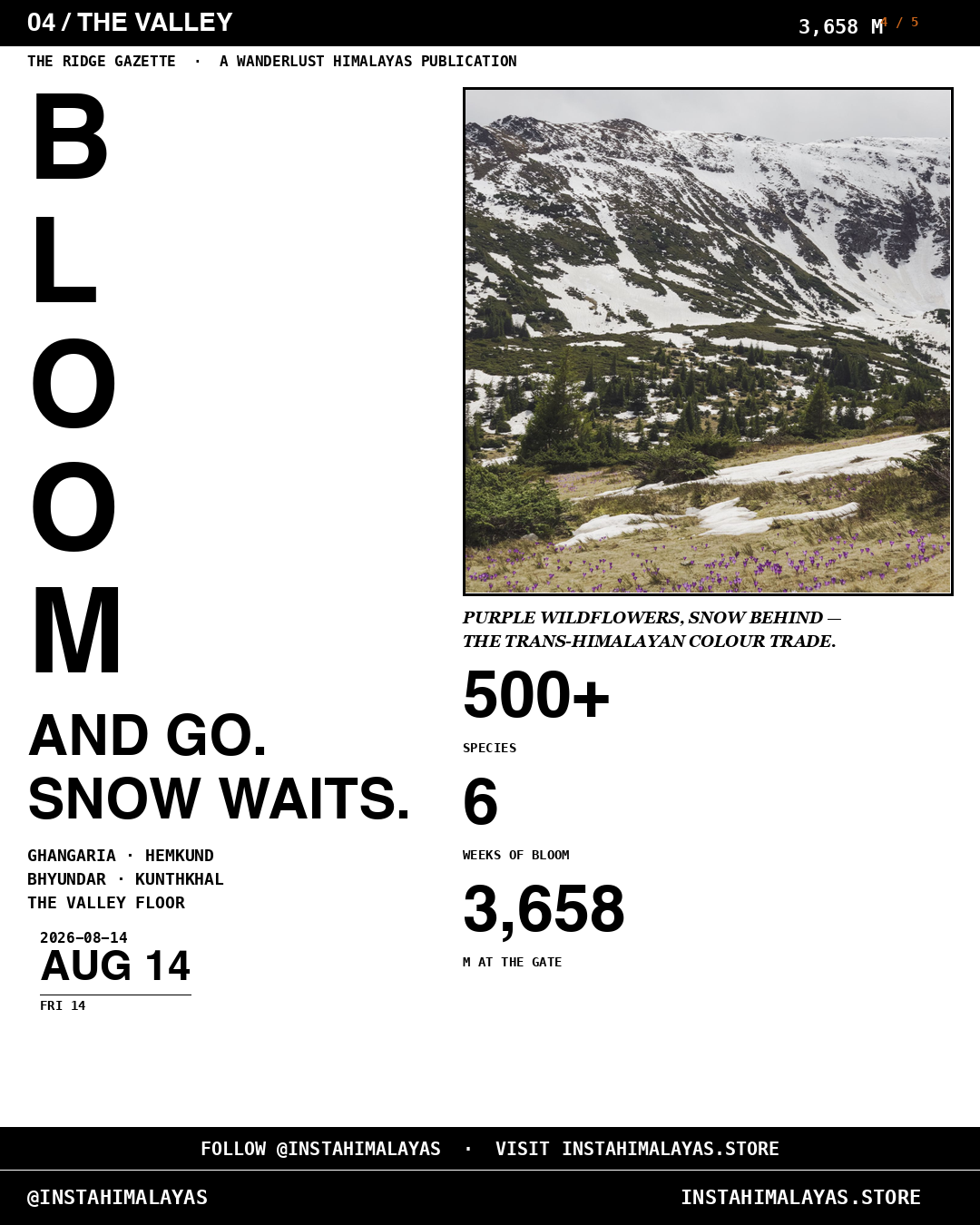
The Valley of Flowers is not a destination in the normal sense. It is a window. The valley floor sits at 3,658 metres in the Garhwal Himalaya, and for eleven months of the year it is snow, rock and silence. Then the monsoon arrives, the snow retreats, and for roughly six weeks — mid-July through mid-August — more than five hundred species of wildflower bloom at once. It is a UNESCO World Heritage site, and it is also one of the quietest famous places on Earth.
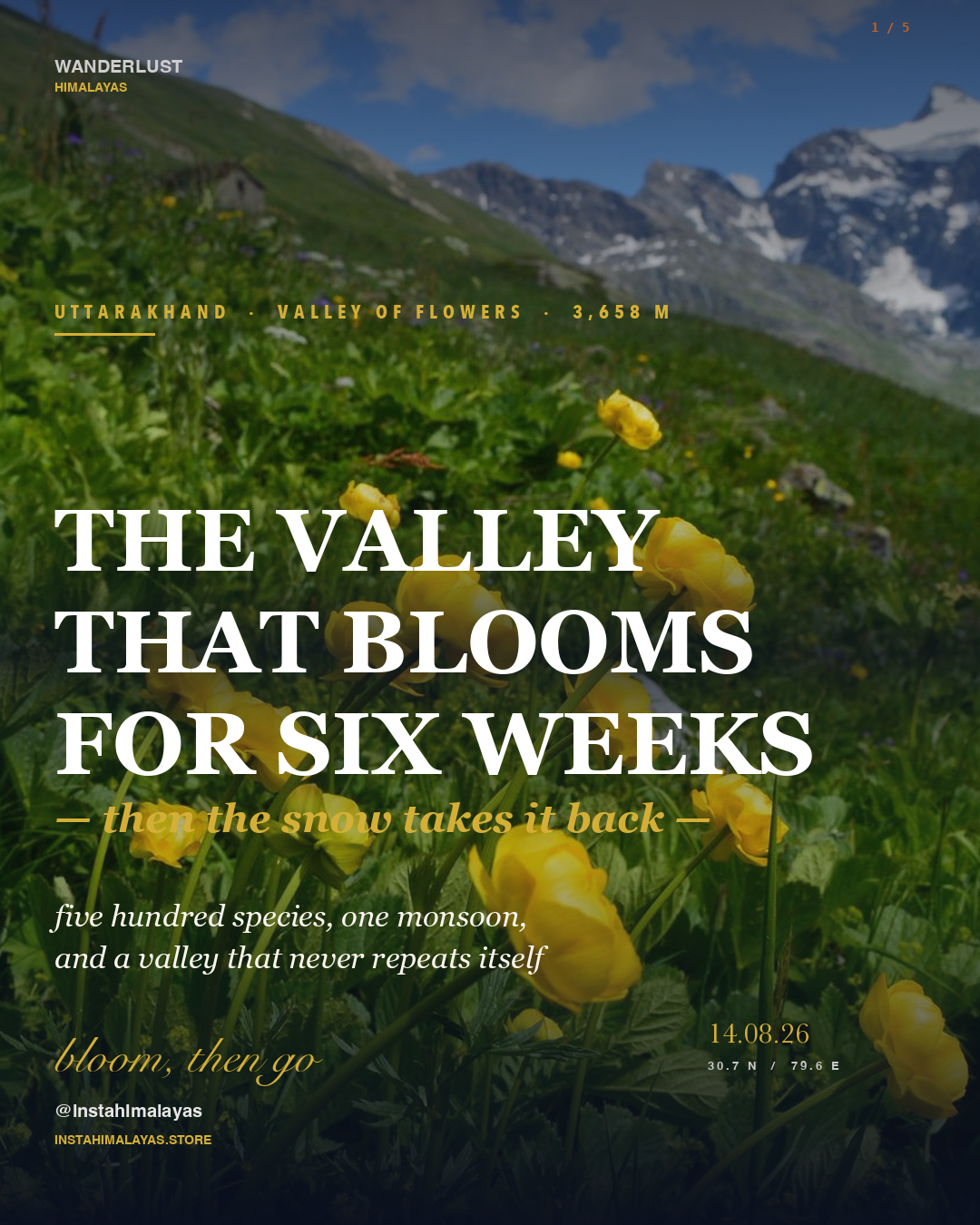
We walked it at the peak of the bloom, and this is the field guide we wish we'd had.
The route
The trek begins at Govindghat, on the Rishikesh–Badrinath road, and climbs to Ghangaria (3,049 m) — the base camp for both the Valley and Hemkund Sahib. From Ghangaria, the valley floor is a gentle 4-kilometre walk that gains just 600 metres. The full day: Ghangaria → the valley mouth → the river crossings → the meadows → back.
- Start: Govindghat (1,828 m)
- Night 1: Ghangaria (3,049 m)
- The valley: 4 km from Ghangaria, 3,658 m at the gate
- Total trek: 2 days, gentle by Himalayan standards
The bloom, by altitude
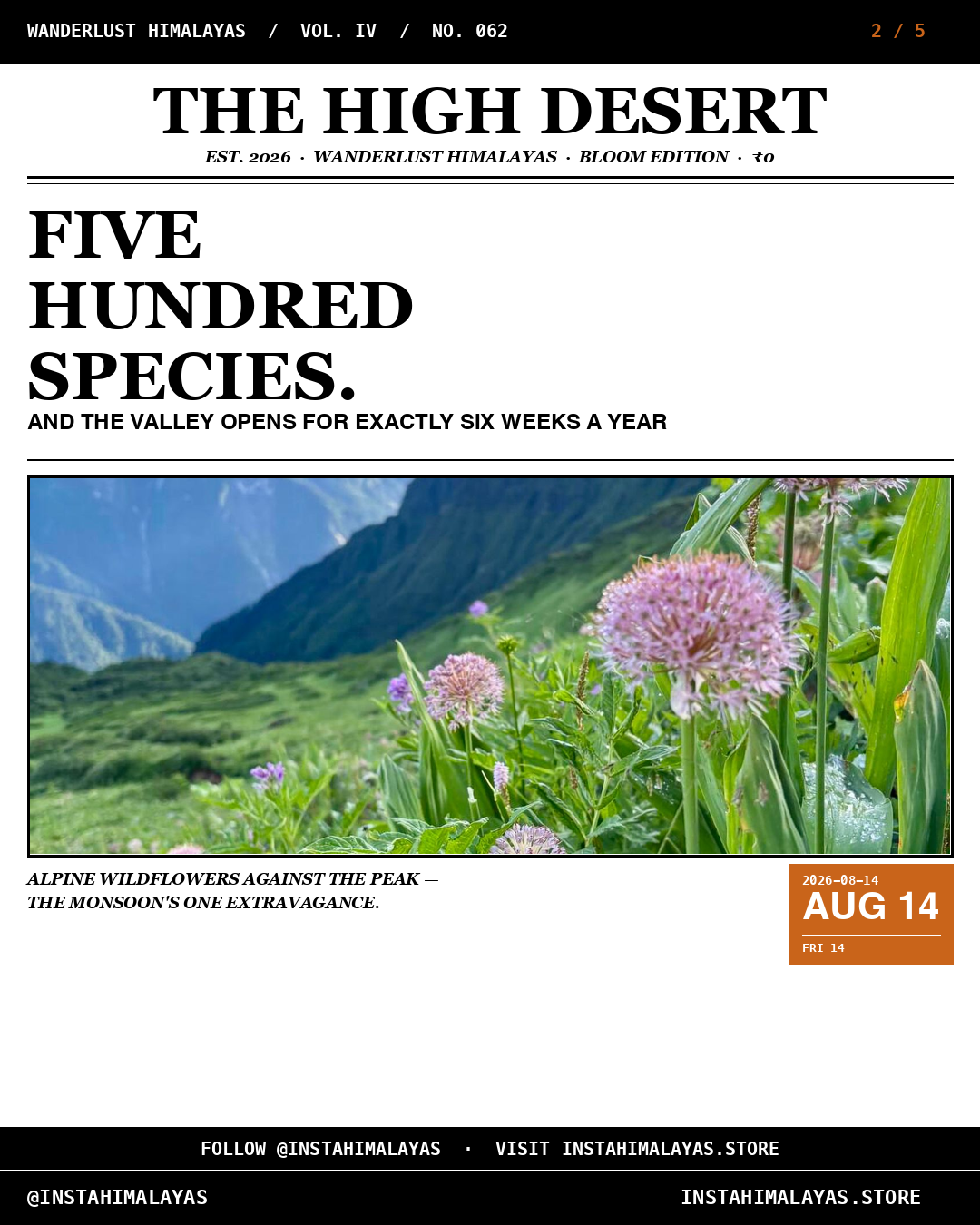
The flowers change with the altitude, which means the valley does not look the same twice in one walk:
- Lower meadows (3,200–3,400 m): yellow globe flowers, blue poppies in the damp patches, wild roses on the edge of the trail
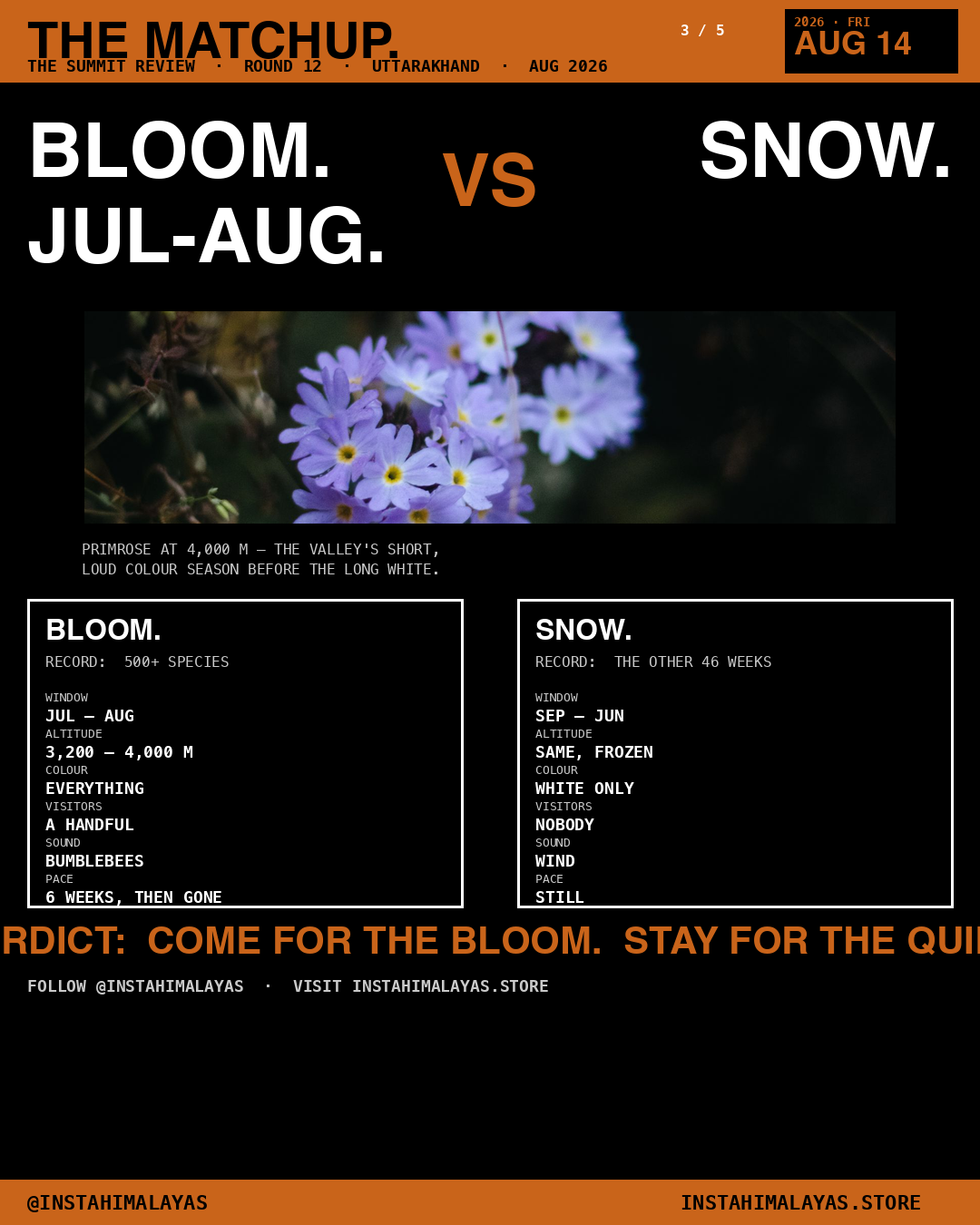
- Mid slopes (3,400–3,700 m): purple primrose, geraniums, and the pale anemones the valley is famous for
- High ground (3,700–4,000 m): brahma kamal (the sacred lotus), cobra lilies, and the last stubborn daisies before the snow line
The practical rules
- The season is the whole game. The valley opens roughly 1 June and closes by early October. The bloom peaks mid-July to mid-August — which is also the wettest fortnight of the year. Pack for rain; the reward is the colour.
- The permit is real. Entry is limited and you must register at the forest checkpost. Carry ID; book the permit in advance in season.
- Acclimatise in Ghangaria. 3,049 m is not extreme, but the valley floor at 3,658 m is a full day's exposure. Sleep low, walk high, drink water like it is a job.
- Go early in the day. The valley gets its best light and its fewest clouds before 11 AM. The afternoon monsoon shower is a ritual, not a surprise.
- Do not pick the flowers. It is a UNESCO site and a fragile ecosystem. Every species you photograph is one the valley has been keeping for centuries.
The higher the bloom, the quieter the trail
The Valley of Flowers is famous enough that the Ghangaria tea stalls run a double shift — but the valley floor itself stays quiet. The crowds cluster at the entrance; the meadows thin them out fast. By the upper meadows, you are walking with the bumblebees and the mist, the way it has always been.
The verdict
The valley keeps no other schedule. Six weeks of colour, then a long white rest. It is the one season the Himalayas allow themselves to be extravagant — and it does not wait for anyone.
Bloom, then go.