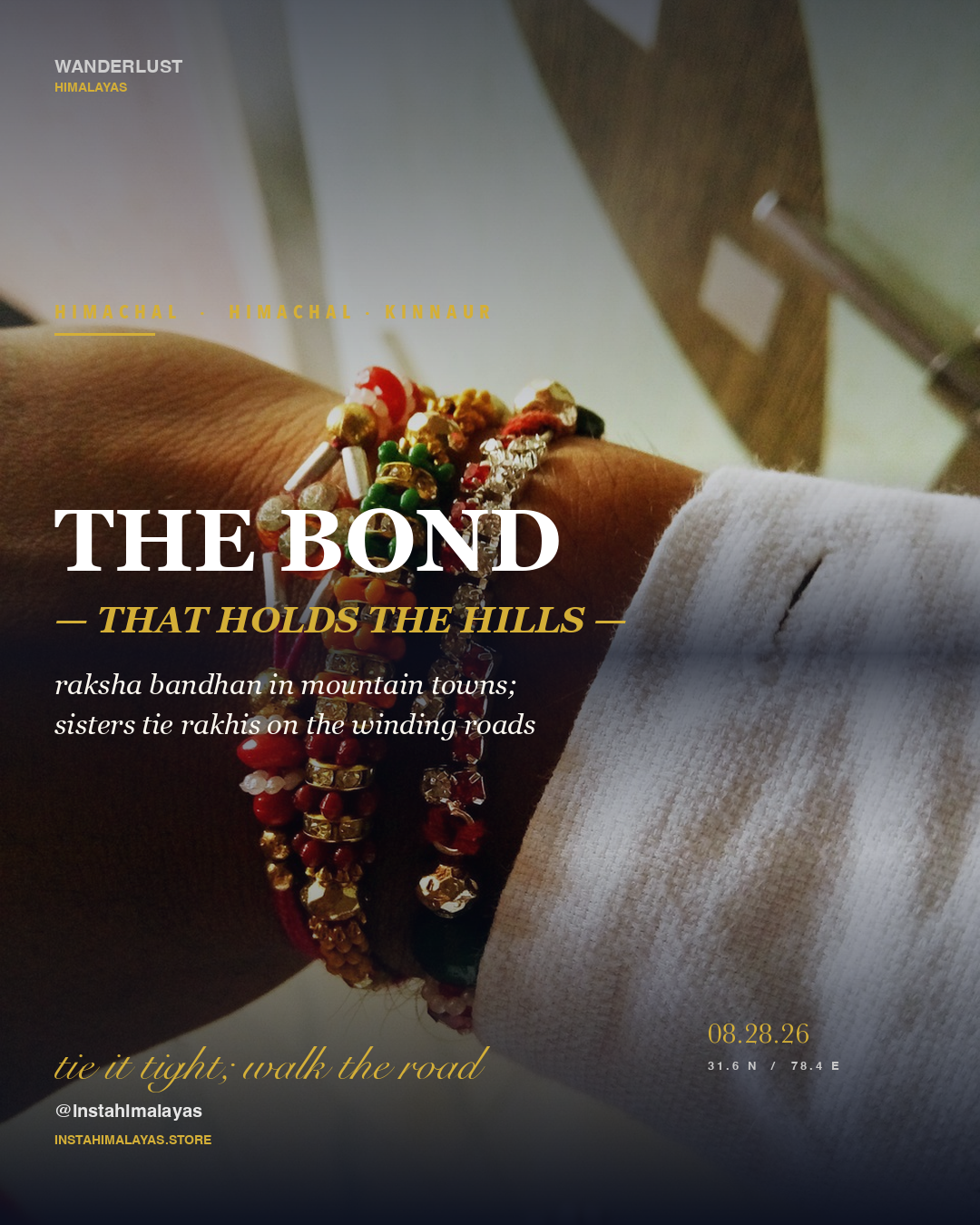
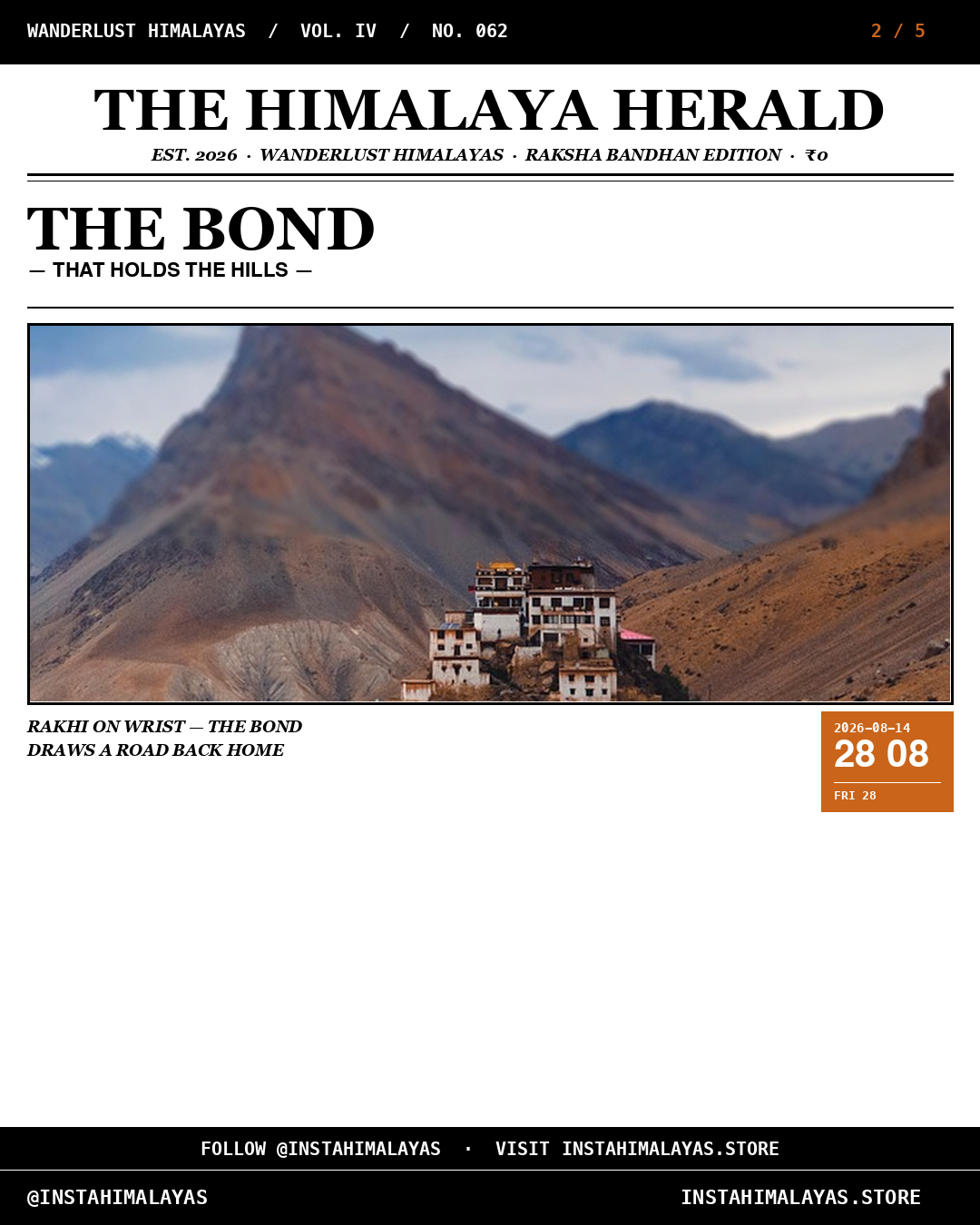
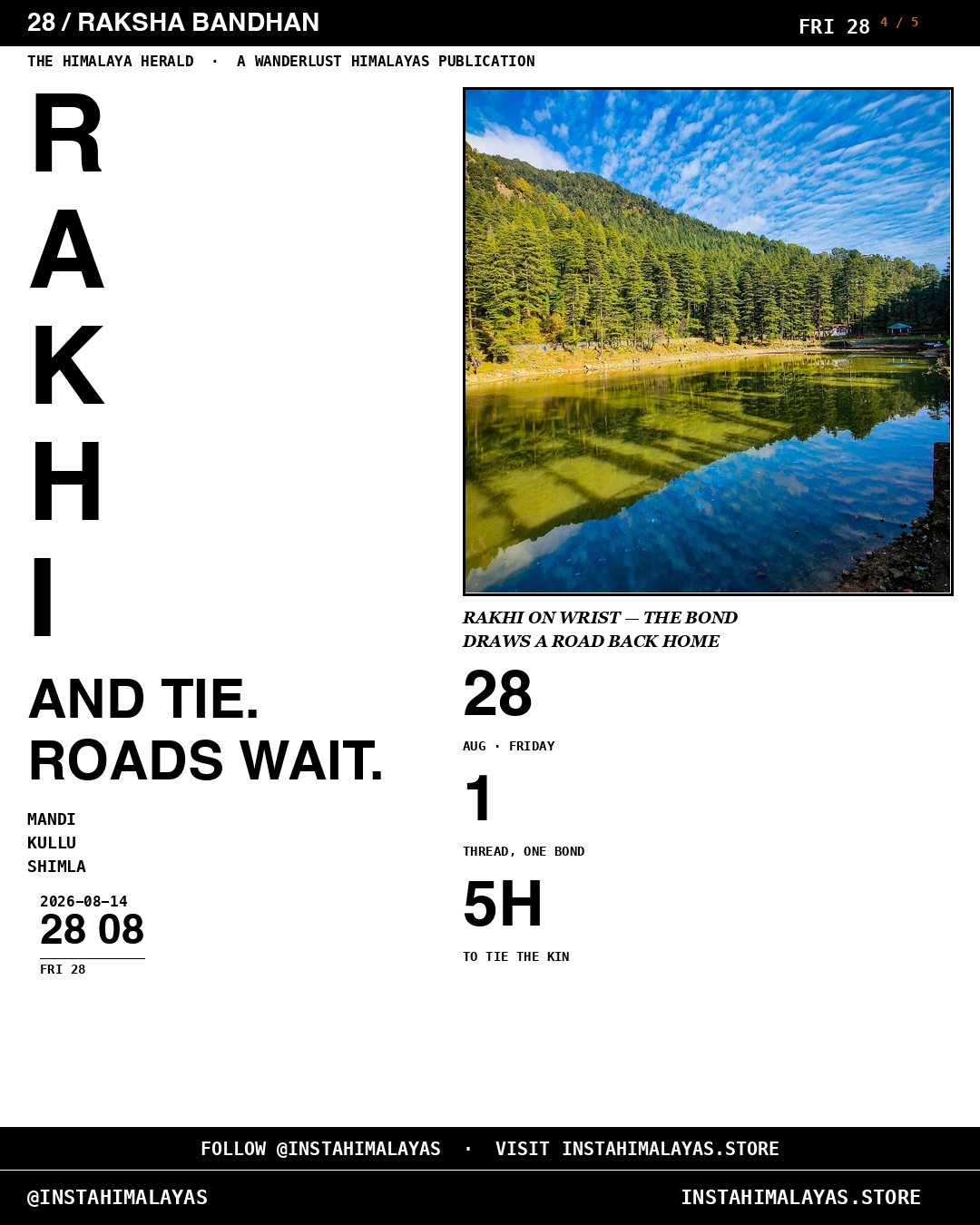
Raksha Bandhan in the hills — the bond that holds villages.
Most of what gets written about himachal is written by people who flown in for three days and posted a hundred photographs. We are not those people. We are still here on a slow friday in late august, and the rakhis are already strung across the village doorways. The bond that holds villages isn't a name; it's a schedule — sisters tie rakhis, brothers return on winding roads, and the fairs fill the mandi squares. That alone is news.
raksha bandhan in the hills — the bond that holds villages isn't a name. it's a schedule. Raksha Bandhan in mountain towns: sisters tie rakhis, brothers return on winding roads, and village fairs fill the mandi squares. Calendar-aware.
— Field Notes, 28 August 2026
Where this sits
This is Himachal. Specifically, it sits inside the belt of Raksha Bandhan in mountain towns — the festival that moves along the roads, not the calendar. If you have only ever seen himachal from a car window or from an instagram caption six times removed, the page you are reading is going to disagree with a lot of what you think.
What you actually do
You arrive on the bus everyone told you not to take. You find the town already dressed — marigold at the temple gates, the fair stalls going up in the mandi square. You watch sisters walk three ridges to tie a thread, and brothers who left for the cities come home on the winding road, bikes loaded with gifts nobody asked for.
That is the raksha bandhan of the hills. It is not tourism; it is belonging. You are not a spectator. You are a guest at the biggest family table in the valley.

What the locals know
They know the fairs are the real festival — the kulfi stall, the wooden toys, the swing that has been bolted to the same tree since before anyone can remember. They know the bus schedules double on rakhi week, and the last bus is never the last bus. They know to look for the colours first: the reds and golds of new threads against the last deep green of the monsoon.
They also know — and this is the part brochures won't tell you — that the postcard shot of the festival is one of the easier things to capture. The hard thing is the quiet afternoon after the ritual, when the town exhales and the stories start.
When to go, and when not to
Go in the festival window. Don't go if you want empty towns — this is the one week the hills are fullest, and that is exactly the point. Don't believe anyone who says it's a five-day trip — add three buffer days for the slow weather event that always happens between the great day and the next great day.
Here's the real advice, in case you missed the subtext: come for the festival once as a visitor, once as a guest. The first trip will charm you. The second trip — the one where you actually sit through a full meal at someone's table — will be the one you remember forever.

What to bring back that isn't a thing
Two things, neither of which weigh anything.
First: the quiet understanding of what family looks like when it's spread across a valley and held together by a thread. Second: a slightly deeper respect for the women who keep the festival running — the sisters, the mothers, the grandmothers who have tied this knot for forty years without missing a single one.
Both of those fit in your hand. Neither of them expire. You can also, if you want, bring back a rakhi and a slightly warped view of what home means. The rakhi should be kept; the warped view is more durable.

The trail forward
We will keep walking himachal slowly and writing it up for you each week on this blog. Subscribe via the field-guide form at the top of instahimalayas.store, or follow the daily climb on our instagram feed (@instahimalayas).
Until next week — go high; go slow.
Today's Instagram lineup
Everything from today's feed, slot by slot — this page is the day's record. If a post ever goes missing, the images live here first.